

Last Thursday at VIENNABallhaus in Vienna, we received a new grant from netidee, Austria’s largest internet funding initiative. That’s a milestone with some history behind it: netidee already backed the original OpenSheetMusicDisplay (OSMD) project back in 2016. Without that early push, OSMD wouldn’t be the widely adopted open-source MusicXML renderer it is today.
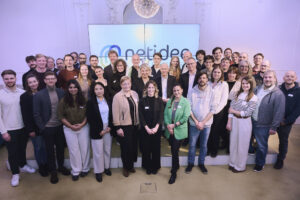



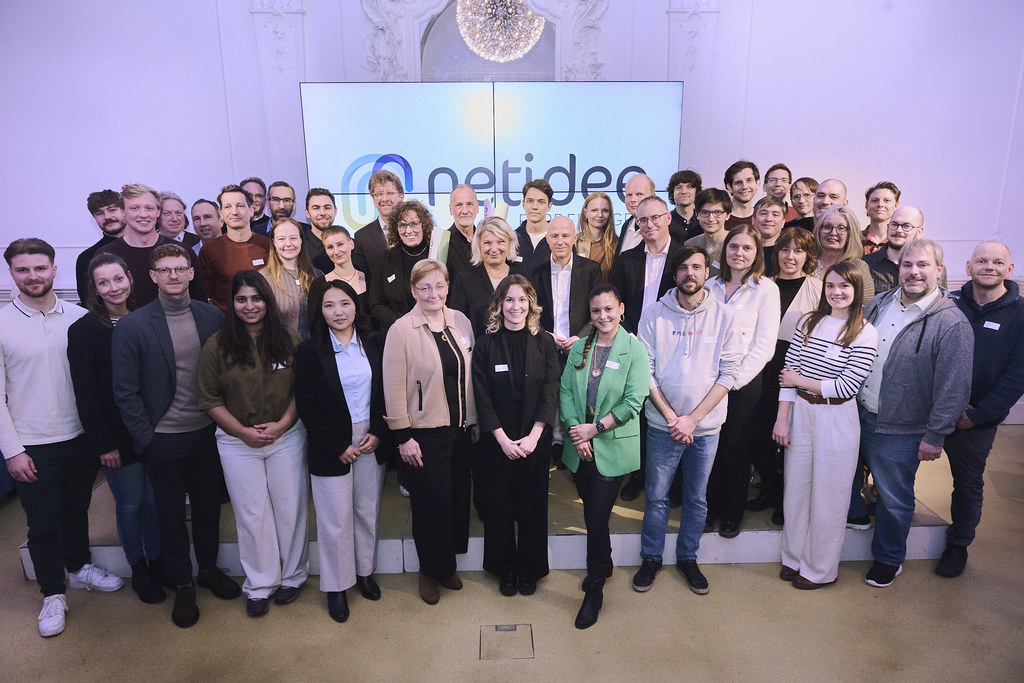
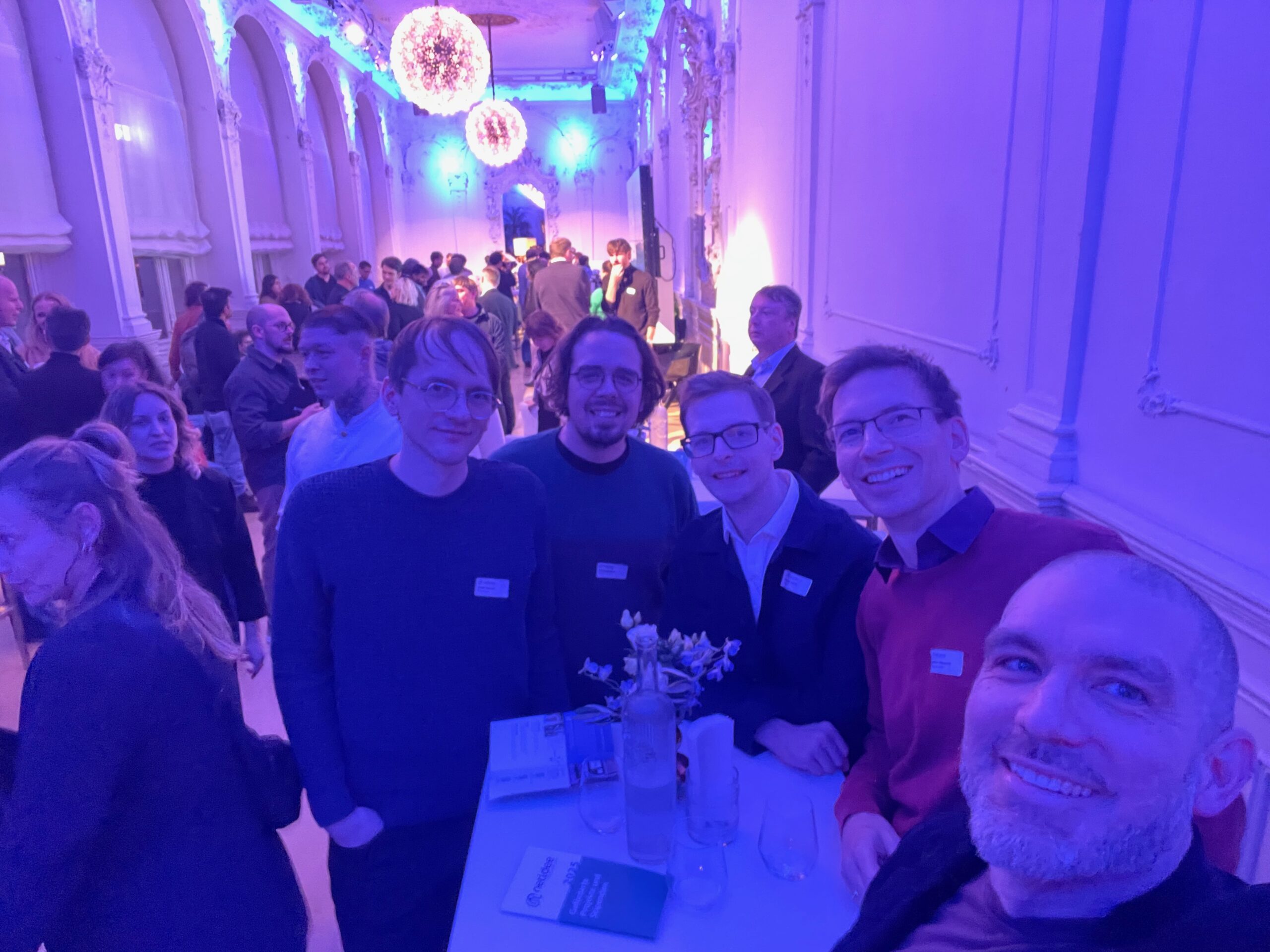
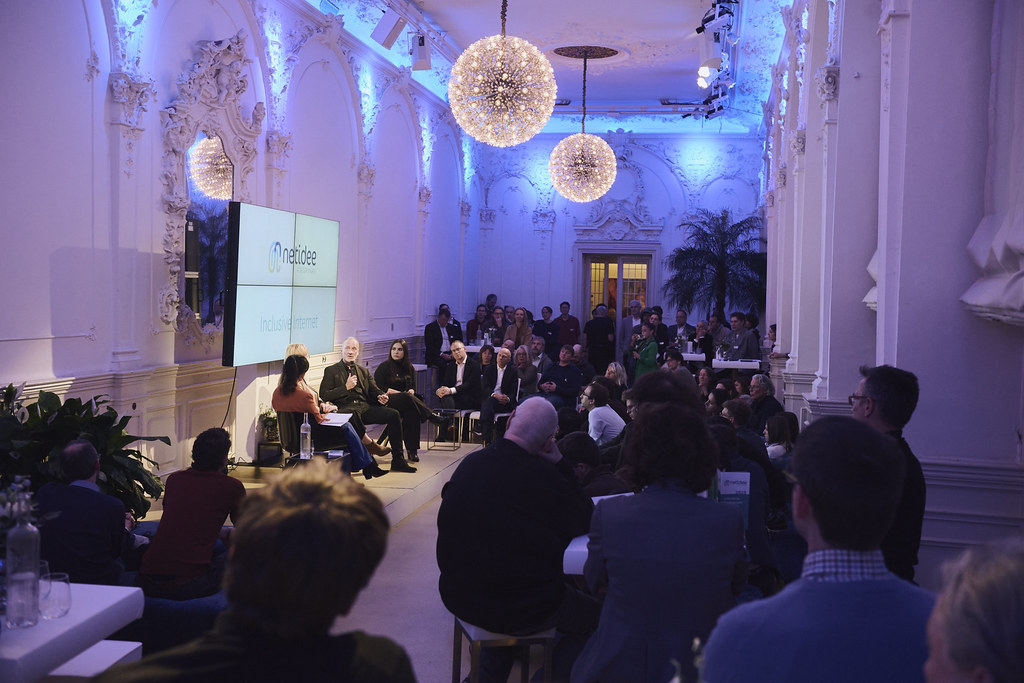









Now, netidee is supporting our next step: OSMD Braille.
What netidee Is — and why it matters
netidee funds projects that strengthen the open internet in Austria. Their mission centers on openness, free access, and technology that benefits the public—criteria that OSMD matched in 2016 and that OSMD Braille meets again today.
The idea is simple: make digital innovation available to everyone. If a project boosts internet accessibility, encourages open-source development, or improves digital inclusion, netidee is the kind of institution that asks, “Why doesn’t this exist already?” and then helps build it.
What OSMD has achieved so far
OpenSheetMusicDisplay is a TypeScript library for rendering MusicXML in the browser, used in web apps, mobile apps, and even WordPress setups. It grew far beyond the original project:
- Used in hundreds of projects worldwide
- ~1,800 GitHub stars and a dedicated community
- Integrations in commercial apps and large-scale partners
- Extended features such as audio playback, custom rendering and plugins
- Active developer support through GitHub, Discord, and sponsorship models
OSMD became the de facto standard for MusicXML rendering online — something even our team didn’t expect at the start.
Why OSMD Braille?
Despite the progress, one thing always stood out: MusicXML is visual. If you rely on a screen reader or a Braille display, traditional notation is practically inaccessible. Even when MusicXML files are technically reachable, screen readers read notes one at a time—slow, fragmented, and barely usable for real learning or navigation.
If the internet is supposed to be for everyone, this gap matters.
OSMD Braille addresses exactly that.
How OSMD Braille works
The project extends OSMD with Live Music Braille:
- MusicXML → Music Braille translation in real time in the browser
- Output directly to Braille displays / Braille keyboards
- Braille notation is shown between staves or at the bottom of the viewport
- Navigation by measure (forward/back), enabling fast scanning
- A public web tool will allow uploading any MusicXML to view it in both traditional notation and live Braille
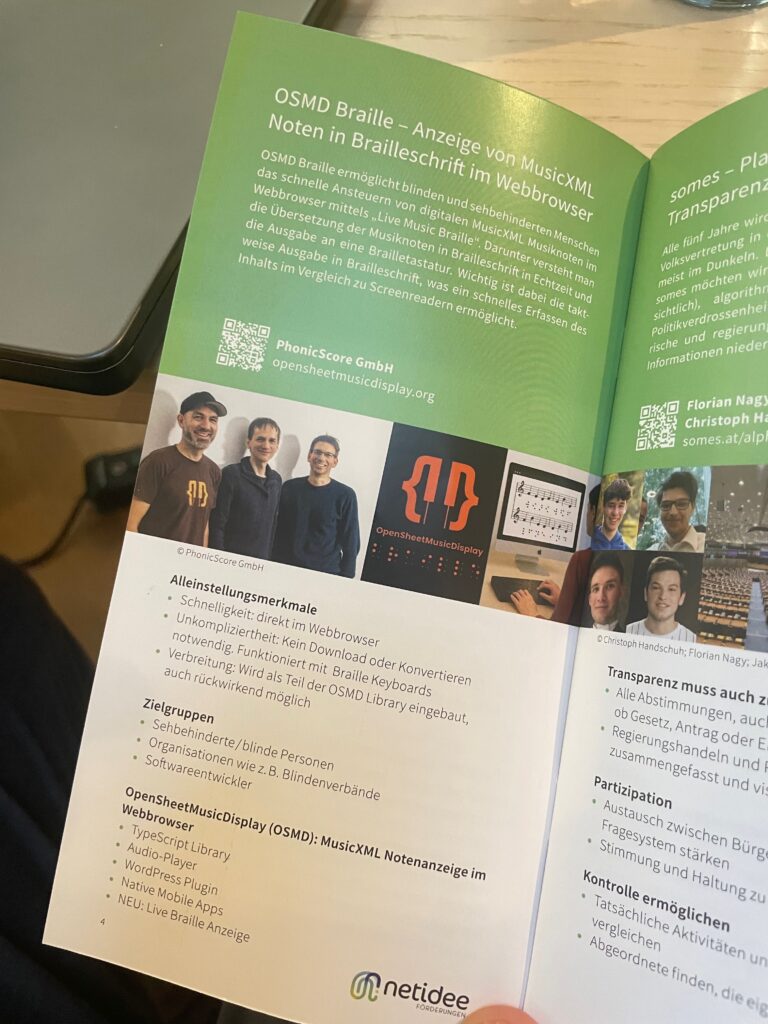
This uses a streamlined non-facsimile Braille approach, which makes the output readable for most musicians with visual impairments. The spec work is not trivial—the Music Braille Code is 428 pages long—but the goal is clear: fast, understandable, and instantly available Braille notation.
Who benefits?
OSMD Braille serves three groups:
- Blind and visually impaired musicians Gives instant access to MusicXML without clunky conversion workflows.
- Organizations such as blind associations. They can embed accessible notation in online courses or learning tools.
- Developers working with MusicXML: OSMD Braille becomes a drop-in extension of the existing OSMD ecosystem—no extra infrastructure required.
Because OSMD is already used globally, the accessibility upgrade spreads automatically to projects built with it.
What Comes Next
Over the project timeline, we will:
- Build and refine the Music Braille conversion engine
- Integrate it into OSMD and our WordPress plugin
- Release a public demo site for trying and testing
- Work with partners such as the Sao Mai Center and the Austrian Blind Union for validation
- Collect developer feedback and iterate
As with OSMD itself, the full project will be BSD-licensed and open to contributors.
Try OSMD Yourself
If you’re building:
- a music learning platform
- an interactive sheet-music app
- an accessibility tool
- or something experimental with MusicXML
…OSMD is free, open source, and surprisingly flexible. The best way to evaluate it is simply to try it:
👉 https://opensheetmusicdisplay.org/demos
OSMD Braille will integrate seamlessly into the same ecosystem once the release is ready. If you want to explore, test, or contribute early, keep an eye on our repository and Discord.
If a funding program supports the idea that the internet should be more accessible, open, and technically bold, that’s something worth leaning into. We’re skeptical by nature but improving access to digital music is one of those cases where the benefits are obvious.
More updates soon.


thanks for your great work on this project!